China’s Snowman Group plans to be a major player in natural refrigerants, both at home and in major and emerging markets around the world. Its strategy doesn’t center on one product line or sector, either. The company is targeting growth across, and beyond, the HVAC&R sector and is working with a wide range of natural refrigerants, including CO2 (R744), hydrocarbons, ammonia (R717) and water (R718).
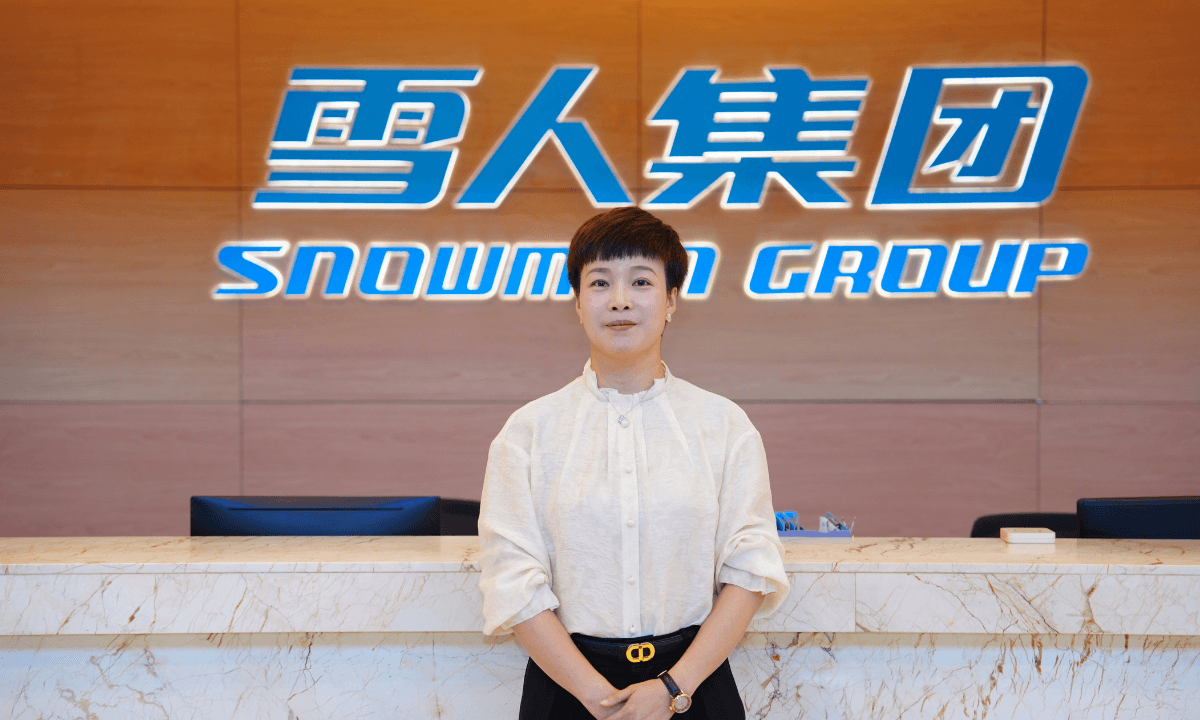
NaturalRefrigerants.com recently spoke with Nancy Lin, Vice President and Senior Engineer at Snowman Group, about the company’s plans in a wide-ranging interview, which has been edited for length and clarity.
How large a share of Snowman Group’s revenue and order intake is based on natural refrigerants today, and what is the target for 2030?
Nancy Lin: At present, natural refrigerant-related business accounts for around 40% of Snowman Group’s total revenue and order intake. We expect this to exceed 60% by 2030. In our chemical industry business, hydrocarbon refrigerants, including propylene [R1270], propane [R290], ethylene [R1150] and ethane [R170], take a large share, mainly serving the petrochemical sector. For the food cold chain business, over 70% of system integration projects adopt CO2 cascade systems, and ammonia is growing year by year.
Which of the four business scopes – cold chain logistics, industrial refrigeration, clean energy and hydrogen power – will grow fastest over the next five years, and what role do ammonia, CO2, hydrocarbons and water play in each?
NL: Our projection is that clean energy will take the highest growth rate followed by hydrogen power. Clean energy covers three segments: industrial heat pumps, natural gas processing and waste heat power generation.
For industrial heat pumps, ammonia- and CO2-based heat pumps are our two main product lines. In the steam heat pump segment, hydrocarbons will become promising refrigerants in the future on the condition that safety risks are well-managed. Where higher steam temperature is required, water vapor compression represents the optimal solution.
In natural gas processing, hydrocarbons are used for natural gas pre-cooling and liquefaction. R290 is commonly used for pre-cooling; for natural gas liquefaction, mixed refrigerant consisting of C1-C4 [halogenated hydrocarbons] and nitrogen [R728] is applied for self-cascade progressive cooling. BOG [boil-off gas] boost in downstream processes is realized by direct natural gas compression. For waste heat power generation, when waste heat temperature is relatively moderate, R717 can be heated and pressurized by industrial waste heat to drive screw expanders for power generation.
What capacity expansion is planned for 2026–2028, and how much of it is dedicated to ammonia, CO2 and hydrocarbon products?
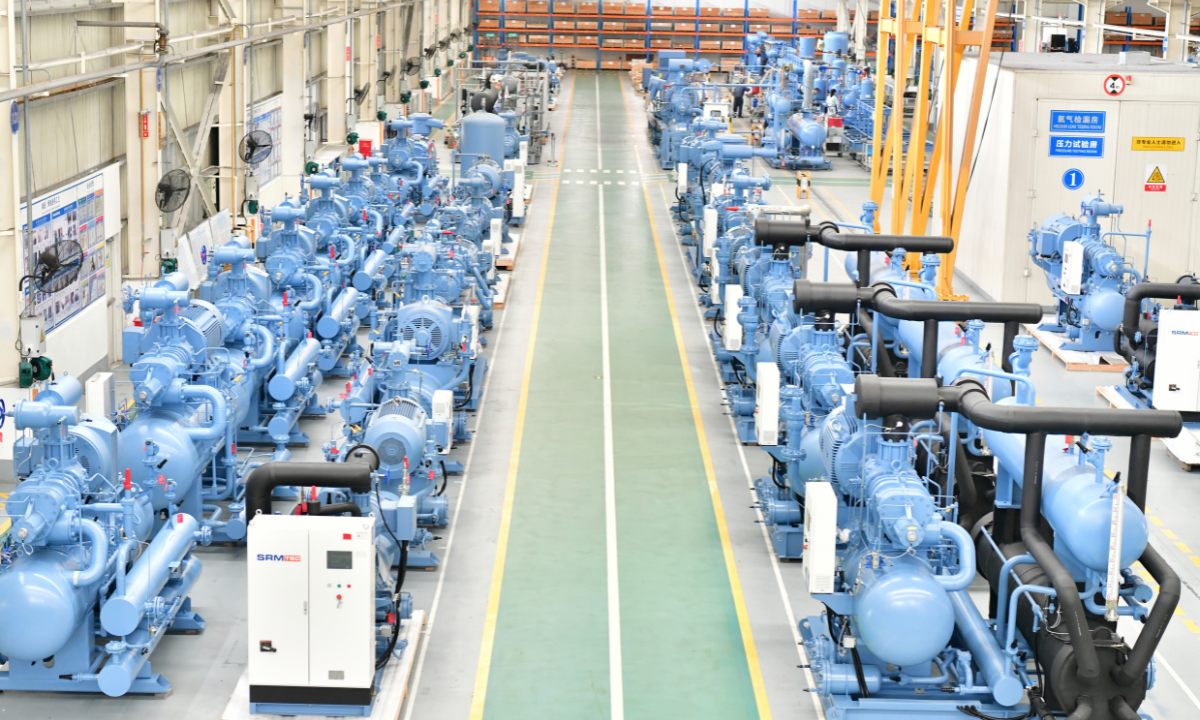
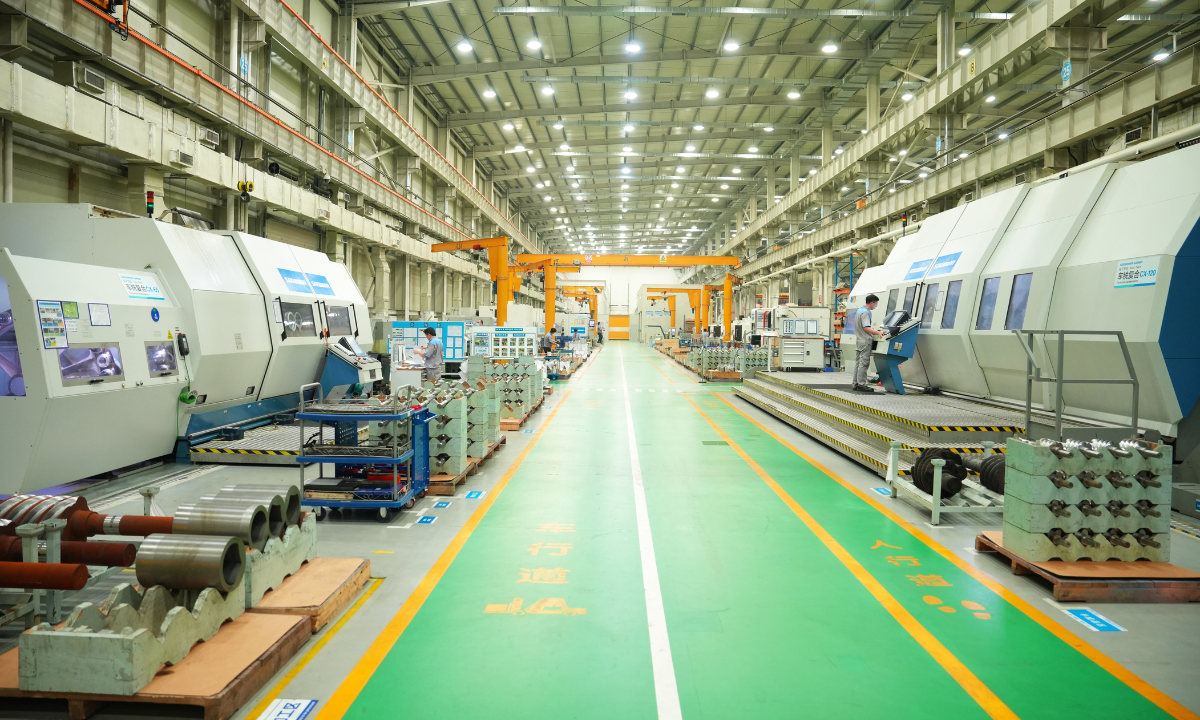
NL: Production line expansion is planned in both Europe and China over the next three years. The European site will focus on the local manufacturing of semi-hermetic ammonia screw compressors and CO2 compressors. In China, we will comprehensively ease existing capacity and production facility bottlenecks, with increased output for ammonia, CO2, hydrocarbon and water vapor-related products.
In the next three to five years, piston, screw and centrifugal compressors will remain our main products and solutions, with R&D targeting larger capacities, higher pressures and higher speeds. We will cover ammonia, CO2, hydrocarbons and water vapor refrigerants for diverse market applications.
Overseas sales grew 23% in 2025 and now make up 30% of revenue. What share do you target by 2030?
NL: We target an overseas revenue share of over 50%. Overseas sales have long outpaced domestic growth. This target is achievable with expanded sales and service staffing. Among global regions, Europe enforces the strictest f-gas regulations and ranks as our top priority market. Large-scale projects may be limited there, yet natural refrigerants enjoy widespread acceptance.
What is the next chapter for SRM in Sweden and RefComp in Italy?
NL: SRM will focus on R&D with an emphasis on large-scale natural refrigerant applications while RefComp will specialize in both R&D and production. Europe is a region with relatively strong applications for natural refrigerants. Based on market demand, we will expand our product applications and manufacturing in Europe.
Please share the current status and future development trends of China’s industrial heat pump market.
NL: According to the 2026 China Heat Pump Industry Development Report, China’s domestic industrial heat-pump market reached RMB 1.8 billion (€240 million/$270 million) in 2025, a 13.9% year-on-year increase. Based on current industry growth rates, installed capacity of industrial heat pump equipment is expected to double by 2030 compared with 2025.
The three development stages of industrial heat pumps in China are:
The planning and demonstration development stage (2025–2030): Achieve carbon peak in the industrial sector, coordinate the development of industrial heat pump industries, conduct large-scale demonstration applications of industrial heat pump technologies in key areas, and guide industrial heat pumps to become the primary heating equipment below 100°C [212°F].
The large-scale electrification substitution stage (2031–2045): Industrial electrification levels continue to advance, the power system further promotes low-carbon transformation, and 160°C [320°F] industrial heat pump technology has matured, making industrial heat pumps a key technology for large-scale electrification substitution.
Comprehensive green and low-carbon transformation stage (2046–2060): A green, low-carbon, safe and efficient industrial energy system will be fully established, and industrial heat pumps will comprehensively promote the green and low-carbon transformation of heat consumption below 200°C [392°F].
Which sectors are converting fastest from gas or coal boilers to heat pumps in China?
NL: Heat pumps are most widely adopted for building heating and hot water supply. Among boiler replacement industrial scenarios, district heating, chemical industry and food processing take the largest application volume. Key driving policies include the “Action Plan for Promoting High-quality Development of Heat-pump Industry” and “Implementation Plan for High-quality Development of Energy-saving Equipment.”
Supporting policies cover energy conservation and carbon reduction in key industries, clean heating, the phase out of boilers and green-factory assessment. Refrigerant regulations together with market prices of steam and natural gas further accelerate boiler-to-heat-pump retrofits across industries.
Where do you see the boundary between natural refrigerant heat pumps and the HFO/HFC-based high-temperature units you also offer, and how do you expect that boundary to move over time?
NL: Application boundaries between natural refrigerant heat pumps and HFO/HFC-based high-temperature units are determined by safety profiles and physical properties of working fluids. Ammonia and isobutane/pentane are suitable for megawatt-level high-temperature industrial heat pumps. CO2 is non-toxic and non-flammable yet operates under high system pressure, making it more suitable for small- and medium-sized projects. Water vapor is non-toxic and non-flammable, making it ideal for ultra-high-temperature steam boosting.
HFO/HFC based high-temperature heat pumps serve as transitional supplementary solutions. Free from flammability/toxicity constraints, they are deployed for small- to medium-load sites where safe natural refrigerant layouts cannot be realized. Going forward, as components and safety codes mature, the HFO/HFC application scope will keep shrinking. Large-scale industrial high-temperature heat pumps will adopt natural refrigerants according to operating temperature and safety conditions.
What does Snowman Group supply to data centers today, and how big is this business now?
NL: Our main entity in this sector is Hangzhou Longhua, a holding subsidiary, which has accumulated 10 years of project experience in the data center field. From air cooling to liquid cooling, we have participated in the construction and operation of nearly a hundred data centers and have the full process integration and general contracting capability for large-scale data center cooling systems.
Which refrigerants are used in your data-center chillers today, and do you see natural refrigerant chillers as viable?
NL: R134a is widely used for data center cooling in our projects in China. R1234ze, CO2 and R513A are feasible alternatives. Ammonia has already been applied in data centers in Denmark, and at present dozens of ammonia semi-hermetic screw compressor units are under testing in European data center projects. Factors including easy accessibility, transportation, storage and refrigerant charge reduction should be considered for real-world deployment.